
Your dashboard just lit up like a Christmas tree. That little amber engine icon is staring at you, and now you’re wondering if your car’s about to explode or if you can ignore it until next month’s paycheck.
Neither, usually.
The check engine light connects to your car’s OBD-II system. Basically a computer that monitors everything from oxygen sensors to catalytic converters. When something reads outside normal parameters, the light comes on. It’s not psychic, and it’s not a scam invented by dealerships, though I understand why it feels that way.

What Triggers It
Could be fifty different things. I’ve seen lights come on for a loose gas cap that wasn’t clicked three times. I’ve also seen them come on because a catalytic converter was cooking itself to death at 1,400 degrees.
Common culprits: oxygen sensors failing (especially on cars past 100k miles), evaporative emission system leaks, mass airflow sensors covered in dirt, misfiring spark plugs, or a catalytic converter that’s finally given up. On older Hondas and Toyotas, it’s often the EVAP system. On certain Ford models, it’s the purge valve every single time.
The light doesn’t tell you severity. That’s the problem. A $15 gas cap and a $2,000 transmission issue look identical on your dashboard.
Stop Guessing, Get The Code
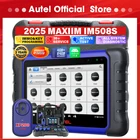
Drive to any auto parts store. They’ll scan it for free. Takes two minutes. You’ll get a code like P0420 or P0171. Write it down.
Don’t let them sell you parts based on the code alone. A P0420 means “catalyst system efficiency below threshold.” Could be the cat converter. Could also be a bad oxygen sensor, an exhaust leak, or even old spark plugs causing incomplete combustion. I’ve seen people spend $1,200 on a new catalytic converter when they needed $80 in spark plugs.
Google the code with your car’s year and model. You’ll find forums where someone with your exact Camry had the same issue three months ago.
When It’s Actually Urgent
Solid light: something’s wrong, but you can drive to a mechanic this week.
Flashing light: stop driving. Right now. That’s an active misfire that’s dumping raw fuel into your catalytic converter. You’re about to turn a $200 problem into a $1,500 problem. I’m serious.
If the light comes on with rough idling, weird smells, or loss of power, don’t push it. If it’s just the light and the car drives normally, you’ve got time.
The Gas Cap Thing Is Real
I know it sounds condescending, but check your gas cap first. Make sure it clicks at least three times when you tighten it. If it’s cracked or the rubber seal looks worn, replace it. Costs $12.
Drive for a day or two. If it was just the cap, the light will turn off on its own after a few drive cycles. The computer needs to run through its checks and confirm everything’s sealed up.
Don’t Clear The Code Without Fixing It
Some guy at your work has an OBD-II scanner and offers to clear the code. Great. Now the light’s off, and you have zero information about what was actually wrong.
The code will come back if the problem’s still there. You’ve just delayed dealing with it. Worse, if you’re trying to pass emissions testing, clearing codes resets all the readiness monitors. Your car will fail inspection even if everything’s mechanically fine because the computer hasn’t finished its testing cycle.
Cheap Fixes vs. Expensive Ones
Oxygen sensors: $50-$150 in parts, easy to replace yourself if you have a socket set.
Mass airflow sensor: clean it with MAF cleaner ($8) before replacing it ($200).
Spark plugs and ignition coils: DIY-friendly on most cars, parts run $100-$300 total.
Catalytic converter: $400-$2,500 depending on your car and whether you go aftermarket or OEM.
If a shop quotes you $800+ for a repair, get a second opinion. I’m not saying they’re ripping you off, but I am saying I’ve seen wild variations in pricing for the same job.
Some Cars Are Just Like This
Certain models throw check engine lights like it’s their hobby. Older Subarus love to trigger P0420. Chrysler minivans from the early 2010s have EVAP issues constantly. Nissan Altimas burn oil and trip sensor codes.
If you’re on a forum and see fifty people with your exact problem, that’s not coincidence. That’s a design flaw. Sometimes the fix is living with it and replacing the same sensor every few years.
When To Walk Away
If your car’s worth $3,000 and the repair quote is $2,500, you’re in rough territory. Especially if it’s an old catalytic converter issue on a high-mileage vehicle. The math doesn’t always work.
But if it’s a $400 fix on a car you planned to keep driving anyway, just fix it. Ignoring it means worse fuel economy, potential damage to other parts, and an automatic emissions test failure in most states.
The check engine light isn’t your enemy. It’s just bad at explaining itself.