
Most people wash their car. Not enough people actually protect it.
There is a meaningful difference between the two. Washing removes what is already there. Protection determines how quickly the dirt, the UV, the scratches, and the slow creep of oxidation come back. One is maintenance. The other is investment. And the cars that look genuinely good after five or ten years of ownership are almost always the ones whose owners understood that distinction early.
The problem is that the car care market is cluttered. There are hundreds of products that promise professional results and deliver mediocre ones. There are sprays that cost a lot and do very little. There are kits with eleven pieces where three actually get used.
This list is not that. These are six car care products that cover the essential bases of protection, cleaning, and restoration without overlap, without waste, and without requiring a professional detailing setup to get results worth having. They work on any car, in any garage, at any skill level.
1. Graphene Ceramic Coating with 20H Hardness and Self-Healing Technology
Let’s start with the one that does the most work over the longest period of time.
Ceramic coating has been a professional detailing staple for years. Graphene ceramic coating is the evolution of that concept. Graphene, one of the hardest known materials in existence, is integrated into the coating formula to push both hardness and flexibility beyond what standard ceramic can achieve. The result is a surface that is harder, more resistant to heat, less prone to water spotting, and more durable against the kind of light contact scratches that accumulate on any car over time.
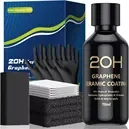
This graphene ceramic coating achieves a 20H hardness rating, which sits well above the 9H ceiling of conventional ceramic products. It also incorporates self-healing technology, meaning light surface scratches and swirl marks generated by normal washing and drying can disappear under heat, either from the sun or from warm water. The UV tracking component monitors coating performance over time.
The claimed protection period is ten-plus years. That is a professional-grade service life from a product you apply yourself.
Application requires a clean, decontaminated paint surface. This is not a step to rush. The prep matters more than the product. But done correctly, the results are a mirror-finish depth, a hydrophobic surface that sheds water and road grime aggressively, and paint protection that means the panel underneath is genuinely isolated from the environment.
For anyone who has looked at the cost of a professional ceramic coating and hesitated, this is a legitimate alternative. The chemistry is the same class of product. What you are doing yourself is the labour.
Works on: All vehicle paint types, single-stage and two-stage paint, new and used vehicles.
2. Soft99 Glaco Rain Repellent Japanese Windshield Glass Coating
Rain repellent products get dismissed as gimmicks by people who have never used a good one. And dismissed as essential by everyone who has.
The difference between an untreated windshield in heavy rain and one treated with a quality hydrophobic glass coating is not subtle. On an untreated screen, water sheets and pools and requires constant wiper speed adjustment to maintain visibility. On a treated screen, water beads and rolls off at speed without the wipers doing much at all. At highway speeds in moderate rain, the wipers become almost optional.
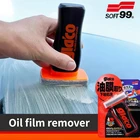
Soft99 Glaco is a Japanese-formulated glass coating that has been a favourite among serious detailers for over two decades. The reason it has lasted while other products have come and gone is simple: it works better and it lasts longer. The formula bonds to the glass surface rather than sitting on top of it, which means it does not wipe away in the first downpour. It also contains an oil film remover that addresses the greasy haze that builds up on glass from traffic pollution and exhaust, which is one of the main contributors to that frustrating nighttime glare on wet roads.
Application takes about ten minutes. Clean the glass, apply the coating, buff off the residue. That is the whole process. The hydrophobic effect begins immediately and builds over the first day or two of exposure.
If you drive regularly in wet conditions, this is not optional. The visibility improvement is genuine, and visibility is directly connected to safety. This one belongs in every car care kit regardless of what else is in it.
Works on: Windscreens, side windows, rear glass, mirrors.
3. Car Scratch Remover and Paint Care Kit with Swirl Remover and Anti-Scratch Wax
Here is an uncomfortable truth about modern car paint. It is thinner than it used to be, and it shows wear faster than most owners expect.
Clear coat on a contemporary production car is typically somewhere between 35 and 50 microns thick. That sounds meaningless until you understand that automatic car washes, road debris, careless hands in car parks, and even washing with the wrong cloth can all leave marks in that layer. After a few years of regular use, most cars have a network of fine swirl marks and light scratches that are invisible in shade and glaringly obvious in direct sunlight. It is not neglect. It is just what happens.
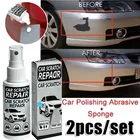
This scratch remover and paint care kit addresses that accumulated damage with a staged approach. The grinding compound handles deeper defects and surface oxidation. The polishing compound follows with a finer cut that removes the marks left by the compound stage and brings the gloss back. The anti-scratch wax closes the process by sealing the corrected surface with a protective layer that makes it more resistant to the same type of damage going forward.
The system works by removing a controlled, minimal amount of clear coat to level out the damage rather than trying to fill it in. That is the correct approach. Fillers mask scratches temporarily. Compound and polish remove them, and the result lasts.
This is the product that makes an older car look like it has been looked after. It does not require a professional polisher, though one helps. Done by hand with patience and the right technique, the results are dramatic on a car that has accumulated a few years of daily-use surface damage.
Works on: Clear coat paint on any vehicle. Not suitable for matte or satin finishes.
4. Car Headlight Restoration Fluid
Look at the headlights on any car that is more than four or five years old and parked outdoors regularly. Chances are, they are not the sharp, clear lenses they were when the car was new. They are yellow. Hazy. Cloudy around the edges. And that degradation is not cosmetic in any casual sense. It is a genuine safety issue.
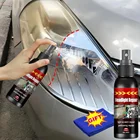
UV radiation from sunlight breaks down the polycarbonate that modern headlight lenses are made from. The clear UV-protective coating applied at the factory has a finite lifespan, and once it degrades, the yellowing accelerates. A heavily oxidised headlight can reduce light output by 70 percent or more compared to a clear lens. That reduction in light projection at night is measurable, significant, and directly affects how much road you can see in time to react.
Replacement headlight assemblies for most vehicles cost several hundred dollars a side. Restoration costs a fraction of that.
This headlight restoration fluid removes yellowing and surface oxidation from polycarbonate lenses and restores optical clarity. The process involves cleaning the lens surface, applying the restoration fluid, and buffing to a clear finish. The improvement on a moderately oxidised headlight is striking. On heavily degraded lenses, the result can look almost new.
This is one of those products where the before-and-after comparison does more persuading than any written description can. It also significantly improves the overall appearance of the front of the car, because headlights in poor condition make even a clean, well-maintained car look tired and neglected.
Works on: Polycarbonate headlight lenses on any vehicle. Not for glass headlights (uncommon on post-1990s vehicles).
5. TPU Paint Protection Film, Clear Self-Healing Anti-Scratch
Ceramic coating protects paint from chemical attack, water spots, and UV. What it cannot protect against is physical impact. Stone chips at highway speed. Door edges in car parks. Gravel kicked up by other vehicles on unsealed roads. For that, you need a physical barrier between the paint and the outside world.
Paint protection film does exactly that.
This TPU paint protection film is an 8.5 mil high-gloss transparent polyurethane film that applies directly to paint surfaces and absorbs the impact energy that would otherwise leave a chip or scratch in the clear coat. At 8.5 mil thickness, it sits in the professional specification range used by prestige vehicle dealers and protection specialists. The self-healing formulation means light scratches in the film surface disappear under heat, which means the film can sustain a lot of contact without looking damaged.
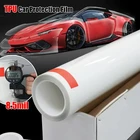
The film is essentially invisible on gloss paint. It does not change the colour, it does not add a visible edge at normal viewing distance, and it does not affect the finish character of the paint beneath it. What it does is absorb the day-to-day physical contact that paint simply cannot handle on its own.
The highest-priority application areas are the bonnet leading edge, the front bumper, the front guards behind the wheels, and the door sill entries. These are the four zones that take the most physical contact on any vehicle and are the four zones where stone chip damage is most visible and most common.
Professional PPF installations run to several thousand dollars for full vehicle coverage. Protecting the high-impact zones yourself with roll material is a fraction of that cost and covers the areas that matter most.
Works on: All gloss paint finishes, glass surfaces, headlight lenses.
6. Windshield Crack Repair Resin
Last one, and it is a practical emergency product rather than a detailing luxury.
A chip in a windscreen is a very small problem that can become a very expensive one with almost no warning. A stone strike at speed creates a small breach in the glass that is structurally compromised. Temperature changes, vibration, and the natural flex of the body over uneven road surfaces all apply stress to that weakened point. A chip becomes a crack. A crack spreads. A spreading crack means a windscreen replacement, which on most modern vehicles with camera mounts and ADAS sensors built into the glass costs significantly more than it used to.
The window for intervention is narrow. A chip that is caught early, before it cracks outward, can be repaired in about twenty minutes with a quality resin.
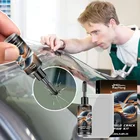
This windshield crack repair resin uses a UV-curing formula that flows into the chip cavity, bonds to the glass structure, and hardens under sunlight or a UV torch to restore the structural integrity of the damaged area. When done correctly, the repaired area is essentially invisible and the crack risk is eliminated.
Keep this in the garage. You will not need it every week. But when you do need it, you need it before the chip has time to spread, which means having it on hand rather than ordering it after the fact.
Works on: Stone chips, minor cracks, and surface scratches on laminated glass windscreens. Not suitable for rear heated glass or side windows.
A Note on Doing This in the Right Order
These six products are not independent of each other. They work better as a sequence.
Start with the headlight restoration and scratch removal if the car has accumulated damage. Get the paint to the best condition it can be in. Then apply the paint protection film to the high-impact areas. Then apply the ceramic coating over everything. Treat the glass with the Glaco rain repellent. Keep the windshield repair resin in the garage as a contingency.
That sequence means every product is working on a properly prepared surface, which is where the difference between a mediocre result and a great one lives.
Browse the full car care product range at Autofrillz for everything needed to clean, protect, and maintain any vehicle properly.