

But does DIY paint protection protect your car?
There’s a quiet shift happening on driveways up and down the country, and it has nothing to do with EVs or subscription heated seats. It’s paint protection, and more specifically, the growing number of ordinary owners who’ve decided that a bottle of graphene coating and a Saturday afternoon is a better use of money than a trade-in.
For years, ceramic coating was the preserve of people who took their cars far too seriously: the sort who’d wince at a bird dropping like it was a personal attack, and who spoke about “hydrophobic properties” the way sommeliers talk about tannins. It required a professional, a climate-controlled bay, and a bill that made you question your priorities. Now you can buy a kit online for the price of a decent set of floor mats, apply it yourself in the garage, and get results that would have seemed implausible a decade ago. The reason so many people are suddenly interested has less to do with detailing culture going mainstream and more to do with a simple change in how we think about cars.
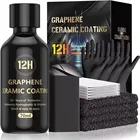
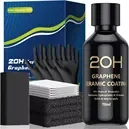
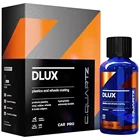
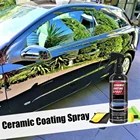
The trade-in habit is breaking
For a long time, the default was to change your car every three or four years, whether it needed it or not. That habit has been quietly dying, squeezed by higher new car prices, stretched finance terms, and a used market that’s rewarded patience. The upshot is that people are holding onto cars longer, which means the condition of the paintwork stops being someone else’s problem in three years’ time and starts being yours indefinitely.
That changes the maths on protection. A coating that costs a few hundred pounds and a weekend of your time looks considerably more sensible when you’re planning to keep the car for eight or ten years rather than three. It’s not vanity so much as maintenance, in the same category as protecting the undercarriage from rust or staying on top of service intervals. Paint that’s been properly protected from the start ages more gracefully, resists the accumulated scuffs and etching that come from years of car parks and questionable washes, and holds its value better when you eventually do sell. Owners have worked this out faster than a lot of the industry expected.
What you’re actually buying
It’s worth being honest about what these consumer kits are and aren’t. A proper ceramic or graphene coating forms a semi-permanent bond with the clear coat, creating a hard, glossy layer that resists UV fading, minor chemical staining, and the fine swirl marks that come from repeated washing. Graphene formulations, which have become the buzzword of the last couple of years, add a bit more flexibility and heat dissipation than traditional silica-based ceramics, and tend to shrug off water spots slightly better. Whether that translates into a meaningfully different result on your driveway is debatable, and there’s more marketing enthusiasm around graphene than hard independent testing to back it up, but neither type is snake oil. Done properly, both genuinely outperform a coat of wax, and by a wide margin.
What you’re not buying is invincibility. No consumer coating stops stone chips, doesn’t care about a shopping trolley, or makes the paint immune to being keyed by someone with a grudge and too much time on their hands. It’s protection against the slow stuff: oxidation, minor contamination, the general greying that untreated paint suffers over years of exposure. Manufacturers who imply otherwise in their marketing copy are, as ever, taking some liberties with the truth.
Where DIY actually falls short of a professional job
The honest gap between a home application and a proper studio job isn’t really about the chemistry, since the coatings themselves are often chemically similar or even identical to professional-grade products sold under different labels. The gap is in preparation. Professional detailers spend the bulk of their time on decontamination and paint correction before a drop of coating goes anywhere near the surface: clay bar treatment to pull embedded contaminants out of the clear coat, polishing to remove existing swirl marks, and a controlled environment free of dust and temperature swings that would otherwise ruin the cure.
Skip that step, or rush it, and you’re sealing in every flaw that was already there, permanently, for the next two or three years. This is the single most common way DIY jobs go wrong, and it’s an easy trap to fall into when you’re keen to get the shiny bit done. The unglamorous truth about good detailing, professional or otherwise, is that the prep work is ninety per cent of the job and the coating itself is an afterthought.
Is it actually worth doing yourself?
If you’re patient, methodical, and willing to spend a full day on prep before you even open the coating bottle, then yes, a DIY graphene or ceramic application can get you eighty to ninety per cent of the way to a professional result for a fraction of the cost. The remaining gap is mostly down to surface correction that takes proper machine polishing to fix, along with the sheer experience of someone who’s done this hundreds of times and can spot problems you’d miss entirely.
For most owners keeping a car long term, that trade-off makes sense. A well-prepped DIY coating still meaningfully outperforms letting the paint fend for itself, and it buys you several years of easier washing, better gloss retention, and a car that looks cared for rather than merely owned. Just don’t expect the £40 kit to work miracles on paint that’s already had a hard life. Wash the car properly, decontaminate it honestly, and be patient with the process, and the results will speak for themselves. Rush it, and you’ll have spent a weekend locking in every flaw you were trying to hide.
Keep the car longer, protect it properly, and the extra years on the driveway start looking a lot less like settling and a lot more like sense.